QuickMed
Designing a telemedicine experience around Nigerian behaviour instead of changing it.
Designing a telemedicine experience around Nigerian behaviour instead of changing it.
5 Weeks
Product Designer
UX Researcher
Team of 3
Project Summary
Millions of Nigerians turn to Google before speaking to a doctor—not because they don't value healthcare, but because accessing it often feels expensive, time-consuming, and inconvenient.
Millions of Nigerians turn to Google before speaking to a doctor—not because they don’t value healthcare, but because accessing it often feels expensive, time-consuming, and inconvenient.
This case study explores how research uncovered the real barriers behind self-medication, and how those insights shaped QuickMed
This case study explores how research uncovered the real barriers behind self-medication, and how those insights shaped QuickMed
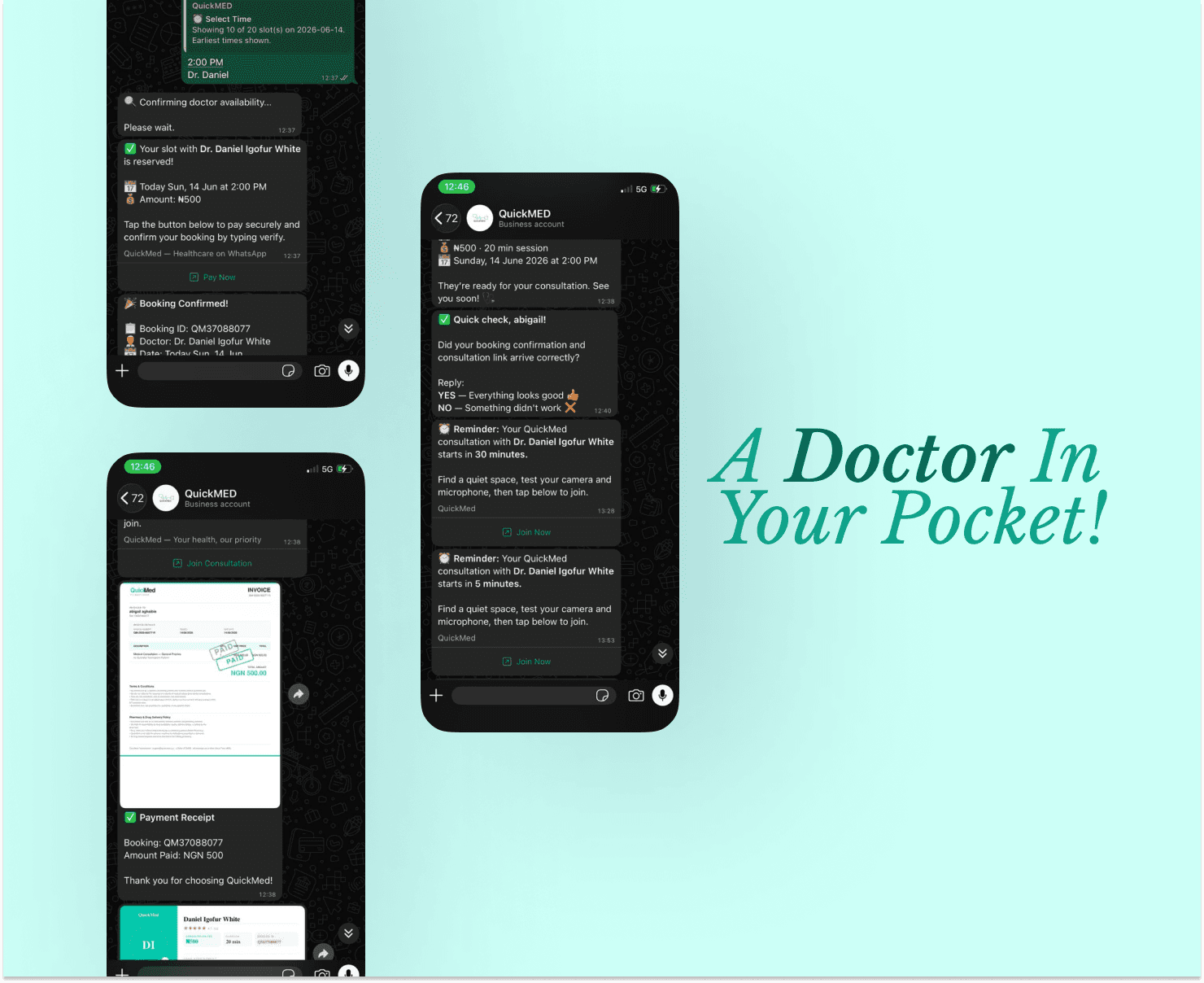
A WhatsApp-based telemedicine experience that helps Nigerians receive professional medical reassurance without disrupting their existing behaviours.
A WhatsApp-based telemedicine experience that helps Nigerians receive professional medical reassurance without disrupting their existing behaviours.
A Moment of Panic
What do you do when you think you've just contracted an STI?
What do you do when you think you've just contracted an STI?
Most people don't rush to a hospital. They reach for their phone. That was exactly what happened to my client.
Most people don’t rush to a hospital. They reach for their phone. That was exactly what happened to my client.

After watching a TikTok video, they became convinced that they might have contracted an STI from a partner. They had no symptoms, felt completely fine, and had no medical reason to panic—but anxiety has a way of making uncertainty feel real.
After watching a TikTok video, they became convinced that they might have contracted an STI from a partner. They had no symptoms, felt completely fine, and had no medical reason to panic—but anxiety has a way of making uncertainty feel real.
Like millions of people, They opened Google. They searched for symptoms. Compared images. Watched videos. Read articles. The more they searched, the more anxious they became.
Like millions of people, They opened Google. They searched for symptoms. Compared images. Watched videos. Read articles. The more they searched, the more anxious they became.
What struck me wasn't that they had searched Google. It was why they searched Google. They weren't looking for treatment. They were looking for reassurance. That realization changed the direction of the entire product.
What struck me wasn’t that they had searched Google. It was why they searched Google. They weren’t looking for treatment. They were looking for reassurance. That realization changed the direction of the entire product.
Key Insight
People don't always seek treatment first. They seek reassurance first
People don’t always seek treatment first. They seek reassurance first
The Bigger Picture
This story isn't unique; it reflected how millions Nigerians make healthcare decisions every day.
This story isn't unique; it reflected how millions Nigerians make healthcare decisions every day.
The more we explored this experience, the more we realized it represented a much larger behavioural pattern.
The more we explored this experience, the more we realized it represented a much larger behavioural pattern.


At first glance, these numbers suggest Nigerians simply avoid hospitals. But the data raised a more interesting question.
At first glance, these numbers suggest Nigerians simply avoid hospitals. But the data raised a more interesting question.
Why would someone trust Google before speaking to a doctor?
Why would someone trust Google before speaking to a doctor?
That became the problem we set out to understand.
That became the problem we set out to understand.
Key Insight
The problem wasn't that Nigerians rejected healthcare. Health often felt harder to access than information
The problem wasn’t that Nigerians rejected healthcare. Health often felt harder to access than information
My Role
Understanding the problem before designing the solution.
Understanding the problem before designing the solution.
As the Product Designer and UX Researcher on this project, my responsibility wasn't simply to design a telemedicine platform.
As the Product Designer and UX Researcher on this project, my responsibility wasn’t simply to design a telemedicine platform.
It was to determine whether the problem was worth solving in the first place—and if so, identify the most effective way to solve it.
It was to determine whether the problem was worth solving in the first place—and if so, identify the most effective way to solve it.
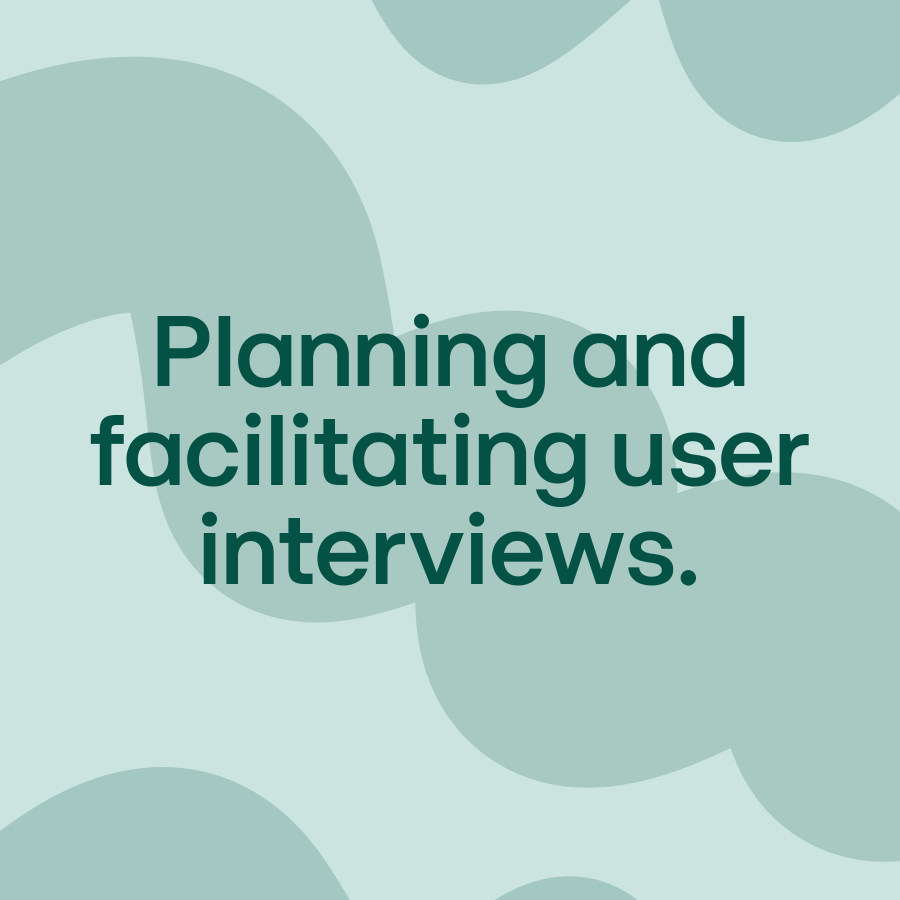
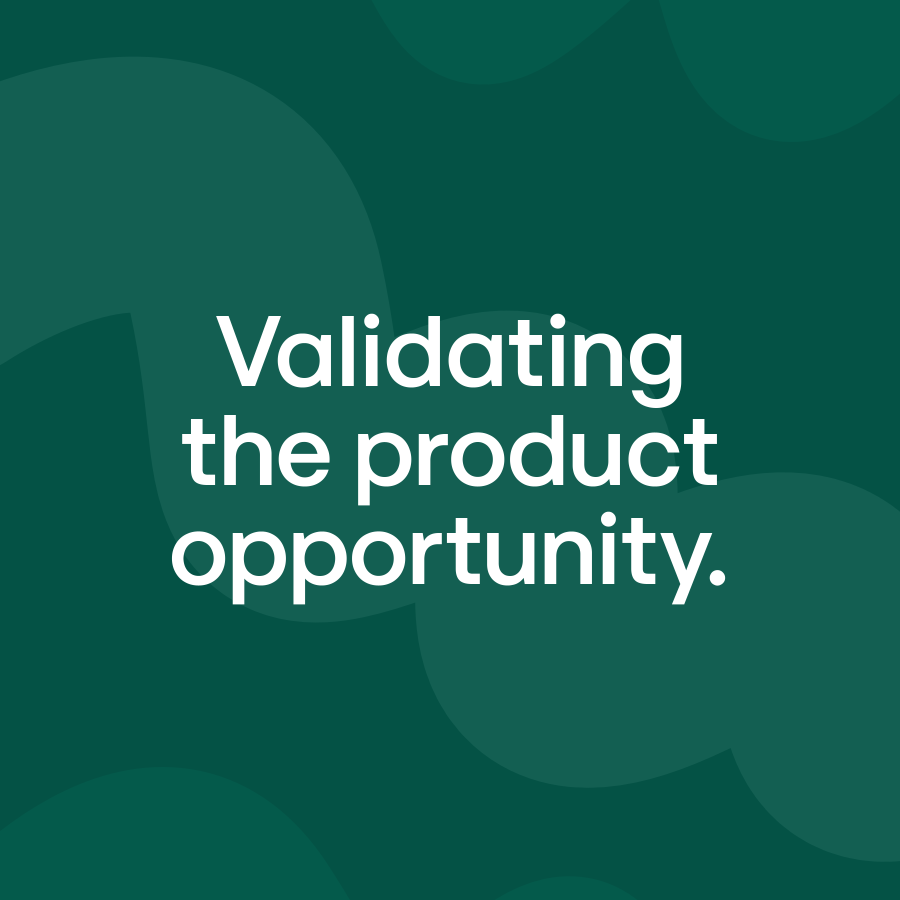
My Responsibilities Included:



Challenging My Own Assumptions
Before researching others, I challenged my own behaviour.
Before researching others, I challenged my own behaviour.
Before speaking to participants, I looked inward. I realized I behaved exactly like the audience we hoped to serve.
Before speaking to participants, I looked inward. I realized I behaved exactly like the audience we hoped to serve.
Whenever I experienced a headache or fever, my first instinct wasn't to book a doctor's appointment—it was to assume it was malaria, buy a "3-in-1" medication from a nearby pharmacy, and hope it disappeared.
Whenever I experienced a headache or fever, my first instinct wasn’t to book a doctor’s appointment—it was to assume it was malaria, buy a “3-in-1” medication from a nearby pharmacy, and hope it disappeared.
That made me wonder: "Was I designing for people like me?"
That made me wonder: “Was I designing for people like me?”
Rather than treating my experiences as facts, I documented them as assumptions that needed validation.
Rather than treating my experiences as facts, I documented them as assumptions that needed validation.
Initial Assumptions

These assumptions helped shaped the research plan and interview questions.
These assumptions helped shaped the research plan and interview questions.
Understanding the People Behind the Problem
My assumptions gave me a starting point, but they couldn't tell the whole story.
My assumptions gave me a starting point, but they couldn't tell the whole story.
To understand why Nigerians often delayed seeking professional care, I combined secondary research with qualitative interviews. My goal wasn't simply to validate an idea—it was to understand the realities shaping healthcare decisions across different demographics.
To understand why Nigerians often delayed seeking professional care, I combined secondary research with qualitative interviews. My goal wasn’t simply to validate an idea—it was to understand the realities shaping healthcare decisions across different demographics.
I wanted to answer one question:
I wanted to answer one question:
Why does Google often become a Nigerian's first doctor?
Why does Google often become a Nigerian’s first doctor?
Secondary Research
Healthcare wasn't competing with hospitals—it was competing with everyday survival.
Healthcare wasn't competing with hospitals—it was competing with everyday survival.
Before speaking to participants, I explored existing reports on Nigeria's healthcare landscape and economic conditions.
Before speaking to participants, I explored existing reports on Nigeria’s healthcare landscape and economic conditions.
Rather than viewing healthcare in isolation, I looked at the financial realities influencing everyday decisions.
Rather than viewing healthcare in isolation, I looked at the financial realities influencing everyday decisions.
My research revealed that:

None of these statistics alone explained healthcare behaviour. Together, however, they painted a clear picture. For many Nigerians, healthcare wasn't ignored because it lacked importance. It was postponed because life presented more immediate financial priorities.
None of these statistics alone explained healthcare behaviour. Together, however, they painted a clear picture. For many Nigerians, healthcare wasn’t ignored because it lacked importance. It was postponed because life presented more immediate financial priorities.
Key Insight
Healthcare wasn't being rejected. It was constantly competing with more urgent needs.
Healthcare wasn’t being rejected. It was constantly competing with more urgent needs.
Defining Our Primary User
The research revealed a pattern—not a stereotype.
The research revealed a pattern—not a stereotype.
Instead of designing for "everyone," I distilled my research into a representative behavioural persona. This wasn't intended to describe every Nigerian. It represented the shared motivations, frustrations, and behaviours that repeatedly surfaced throughout the research.
Instead of designing for “everyone,” I distilled my research into a representative behavioural persona. This wasn’t intended to describe every Nigerian. It represented the shared motivations, frustrations, and behaviours that repeatedly surfaced throughout the research.
Persona

Although Chinedu is fictional, the behaviours he represents appeared consistently throughout both secondary research and user interviews. Designing around these behaviours became far more valuable than designing around demographic characteristics.
Although Chinedu is fictional, the behaviours he represents appeared consistently throughout both secondary research and user interviews. Designing around these behaviours became far more valuable than designing around demographic characteristics.
Key Insight
Behaviour—not age, income, or occupation—became the foundation of every product decision.
Behaviour—not age, income, or occupation—became the foundation of every product decision.
Listening to Real People
The numbers explained what was happening. The interviews explained why.
The numbers explained what was happening. The interviews explained why.
Secondary research revealed patterns. Interviews revealed motivations.
Secondary research revealed patterns. Interviews revealed motivations.
To better understand those motivations, I conducted 10 semi-structured remote interviews with Nigerians between the ages of 25 and 65, representing a mix of occupations, income levels, and locations.
To better understand those motivations, I conducted 10 semi-structured remote interviews with Nigerians between the ages of 25 and 65, representing a mix of occupations, income levels, and locations.
The interviews explored six key questions

Rather than looking for identical answers, I searched for recurring themes.
Rather than looking for identical answers, I searched for recurring themes.
Four Themes Emerged
Different stories.
The same frustrations.
Different stories.
The same frustrations.


These themes also explained why different age groups visited hospitals for different reasons.
Younger participants generally waited until symptoms became unbearable or were encouraged by family members. Older participants were more likely to visit after medication failed or because they already had access to health insurance.
Across both groups, however, one statement remained remarkably consistent.
"The hospital takes the whole day."
“The hospital takes the whole day.”
Key Insight
People weren't avoiding doctors. They were avoiding uncertainty, inconvenience, and unnecessary commitment.
People weren’t avoiding doctors. They were avoiding uncertainty, inconvenience, and unnecessary commitment.
Turning Research into Opportunities
Every insight created a new design question.
Every insight created a new design question.
At this point, we understood the problem. The next challenge was deciding how to solve it. To bridge the gap between research and design, I translated each insight into a series of How Might We questions.
At this point, we understood the problem. The next challenge was deciding how to solve it. To bridge the gap between research and design, I translated each insight into a series of How Might We questions.
How Might We Board

Key Insight
The challenge wasn't designing a telemedicine platform.The challenge was reducing the friction that prevented people from using it.
The challenge wasn’t designing a telemedicine platform.The challenge was reducing the friction that prevented people from using it.
From Research to Strategy
Research didn’t tell us what to build. It told us what not to build.
Research didn’t tell us what to build. It told us what not to build.
Nigerians wanted faster access to medical reassurance. They wanted trusted medical advice without spending an entire day at the hospital, and they wanted that experience to fit naturally into their lives.
Nigerians wanted faster access to medical reassurance. They wanted trusted medical advice without spending an entire day at the hospital, and they wanted that experience to fit naturally into their lives.
The question was no longer whether to build a telemedicine product. It was how to build one that people would actually use. Instead of jumping straight into design, we paused to evaluate what the product needed to achieve.
The question was no longer whether to build a telemedicine product. It was how to build one that people would actually use. Instead of jumping straight into design, we paused to evaluate what the product needed to achieve.
Our strategy was guided by four principles

The Research Changed Our Direction
When we began this project, we assumed the opportunity was to build a telemedicine product.
When we began this project, we assumed the opportunity was to build a telemedicine product.
Our research challenged that assumption. It showed that Nigerians weren't resistant to healthcare.
They were resistant to friction.
They wanted medical reassurance.
They wanted convenience.
They wanted trusted guidance.
Most importantly, they wanted all of it without disrupting the routines they already had.
Our research challenged that assumption. It showed that Nigerians weren’t resistant to healthcare.
They were resistant to friction.
They wanted medical reassurance.
They wanted convenience.
They wanted trusted guidance.
Most importantly, they wanted all of it without disrupting the routines they already had.
Our questions changed to
Our questions changed to
"How do we bring healthcare into a place Nigerians already trust?"
“How do we bring healthcare into a place Nigerians already trust?”
That question would ultimately shape every major product decision—from choosing WhatsApp as our platform to designing an AI conversation that felt more like talking to Google than navigating a hospital.
That question would ultimately shape every major product decision—from choosing WhatsApp as our platform to designing an AI conversation that felt more like talking to Google than navigating a hospital.
The Biggest Decision Wasn’t Designing an Interface
The Biggest Decision Wasn’t Designing an Interface
It was deciding not to build another app. Our first instinct was the obvious one. Build a telemedicine application. It seemed like the standard approach. Users would download the app, create an account, book a consultation, and speak to a doctor.
It was deciding not to build another app. Our first instinct was the obvious one. Build a telemedicine application. It seemed like the standard approach. Users would download the app, create an account, book a consultation, and speak to a doctor.
But when we compared that idea against our research, it quickly became clear that we were introducing the very friction we were trying to eliminate.
But when we compared that idea against our research, it quickly became clear that we were introducing the very friction we were trying to eliminate.
Downloading another application meant asking users to:

Every one of those steps became another opportunity for users to abandon the journey. Every one of those steps became another opportunity for users to abandon the journey.
Every one of those steps became another opportunity for users to abandon the journey. Every one of those steps became another opportunity for users to abandon the journey.
That question would ultimately shape every major product decision—from choosing WhatsApp as our platform to designing an AI conversation that felt more like talking to Google than navigating a hospital.
That question would ultimately shape every major product decision—from choosing WhatsApp as our platform to designing an AI conversation that felt more like talking to Google than navigating a hospital.
Evaluating the Alternatives
We explored three possible directions before choosing one.
We explored three possible directions before choosing one.
Rather than committing to the first idea, we evaluated three different approaches.

At first glance, the mobile app appeared to be the strongest technical solution. From a user behaviour perspective, however, it was the weakest.
At first glance, the mobile app appeared to be the strongest technical solution. From a user behaviour perspective, however, it was the weakest.
Choosing WhatsApp
Instead of asking Nigerians to come to our product, we brought the product to them.
Instead of asking Nigerians to come to our product, we brought the product to them.
One question kept coming up throughout our research.
One question kept coming up throughout our research.
Where do Nigerians already communicate every day?
Where do Nigerians already communicate every day?
WhatsApp.

It wasn’t just another messaging application. It was where people chatted with family, called friends, shared information, ran businesses, and even sought advice. Most importantly, it required no new learning.
No downloads. No onboarding. No behavioural change. Instead of convincing users to adopt another healthcare application, we decided to embed healthcare inside a platform they already trusted.
QuickMed became an on-demand telemedicine experience that connects users with licensed doctors directly through WhatsApp. Rather than disrupting existing habits, we built around them.
Key Insight
Great product strategy sometimes means designing less—not more.
Great product strategy sometimes means designing less—not more.
Designing for Existing Behaviour
Google had already taught us how people searched for healthcare.
Google had already taught us how people searched for healthcare.
During interviews, one behaviour appeared repeatedly. Whenever people experienced symptoms, they searched Google. Not because Google was a doctor. Because Google responded immediately.
During interviews, one behaviour appeared repeatedly. Whenever people experienced symptoms, they searched Google. Not because Google was a doctor. Because Google responded immediately.
Role of AI
The AI wasn’t designed to replace doctors. It was designed to prepare users for them.
The AI wasn’t designed to replace doctors. It was designed to prepare users for them.
We introduced an AI-powered triage that helps users describe their symptoms, answers follow-up questions, and organizes key information before they see a doctor. This gives both patients and doctors valuable context, making consultations more focused and effective.
We introduced an AI-powered triage that helps users describe their symptoms, answers follow-up questions, and organizes key information before they see a doctor. This gives both patients and doctors valuable context, making consultations more focused and effective.
The AI serves three important purposes

Key Insight
The AI wasn’t replacing doctors. It was creating reassurance.
The AI wasn’t replacing doctors. It was creating reassurance.
Designing the Consultation Experience
Every step was designed to reduce commitment while increasing confidence.
Every step was designed to reduce commitment while increasing confidence.
Our final consultation journey followed a simple philosophy: Reduce uncertainty first. Ask for commitment second.
Our final consultation journey followed a simple philosophy: Reduce uncertainty first. Ask for commitment second.
User Journey

A Strategy Built on Behaviour
Every major decision traced back to one research finding.
Every major decision traced back to one research finding.
Looking back, none of our biggest decisions came from brainstorming sessions. They came directly from research.
Looking back, none of our biggest decisions came from brainstorming sessions. They came directly from research.
Research VS Product Decision

Final Insight
The product wasn't designed around technology. It was designed around people.
The product wasn’t designed around technology. It was designed around people.
That principle shaped every decision we made—from the first conversation flow to the final booking experience.
That principle shaped every decision we made—from the first conversation flow to the final booking experience.
But research was only the beginning.
Research helped us understand what people needed. It didn't tell us whether our solutions actually worked. To answer that, we tested prototypes with real users, uncovered unexpected usability issues, challenged our assumptions, and iterated on the experience until it felt effortless.
Research helped us understand what people needed. It didn’t tell us whether our solutions actually worked. To answer that, we tested prototypes with real users, uncovered unexpected usability issues, challenged our assumptions, and iterated on the experience until it felt effortless.
The next chapter explores how testing reshaped QuickMed—and why some of our biggest product improvements only emerged after users got their hands on it.
The next chapter explores how testing reshaped QuickMed—and why some of our biggest product improvements only emerged after users got their hands on it.
Every product decision we made could be traced back to a research insight. The next question was simple: Did those decisions actually work?
Every product decision we made could be traced back to a research insight. The next question was simple: Did those decisions actually work?
Ready to build something amazing?
Ready to build something amazing?
I'd love to connect with you!
All Works
All Works
Back
Back
Next Project
Next Project